Plastering & skimming
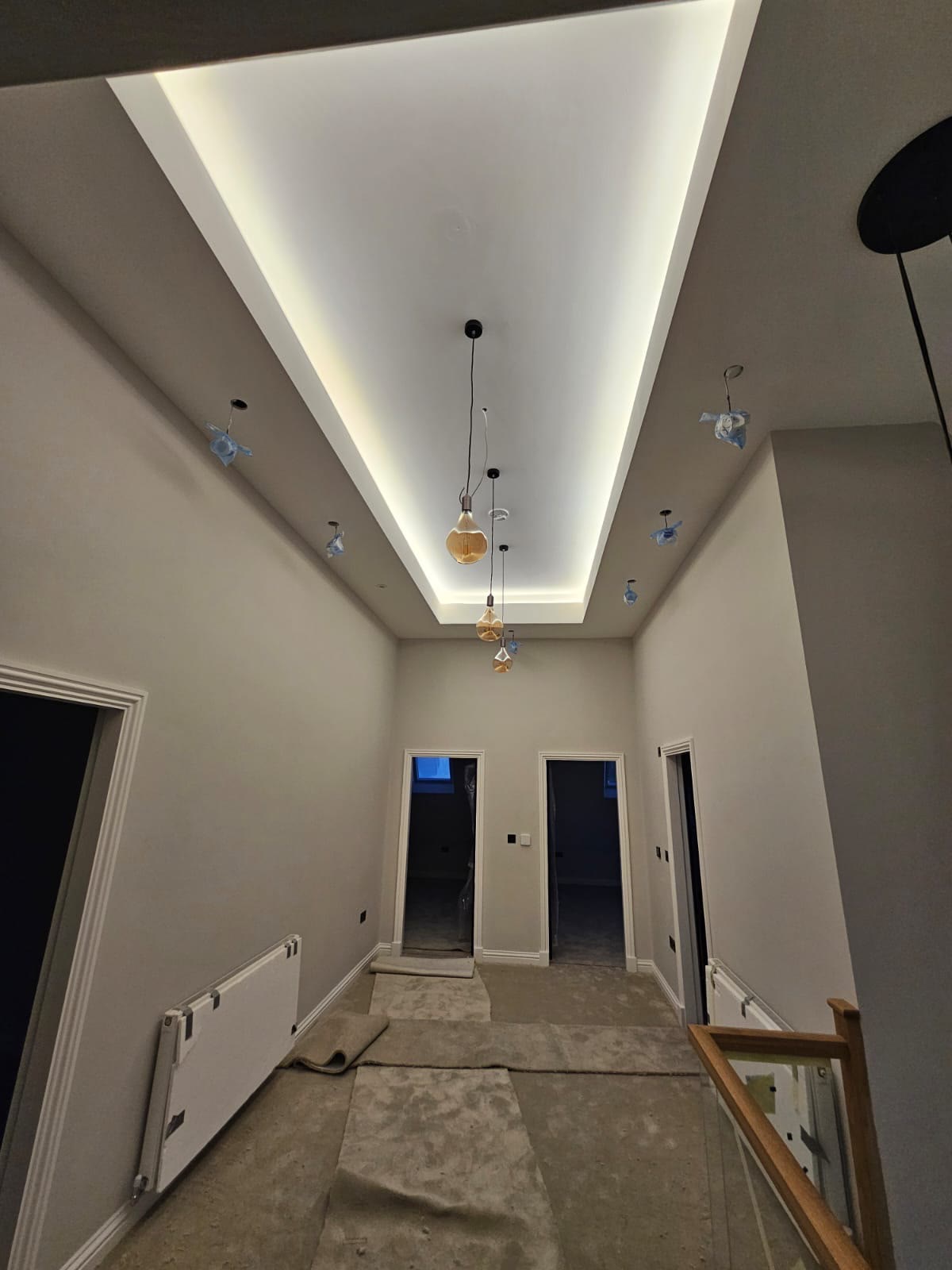
Flat walls, sharp corners and ceilings without a shadow along them — ready for the decorator and finished to the standard we'd want in our own homes.
What we take on inside
- Skimming over existing walls — tired, patched or previously papered walls brought back to a smooth, paint-ready finish.
- Artex removal and skimming over — those swirled or stippled ceilings flattened out and made modern again.
- Dot and dab plasterboarding — boarding out to masonry, then skimmed. The usual answer for cold, uneven or damp-affected walls.
- Full room and whole house re-plasters — walls and ceilings, top to bottom, as part of a refurb or renovation.
- Ceilings — overboarding a cracked ceiling, or taking down and replacing lath and plaster.
- New build and extension plastering — boarding, taping, skimming, ready for second fix.
- Making good — after a new window, a removed chimney breast, a rewire, a knocked-through wall, or a leak.
- Small repairs and patching — yes, genuinely. See below.
How we leave a room
Plastering is a messy trade, but the mess should stay contained. We sheet floors, mask what needs masking, and take all the bags and old plaster away with us at the end of the job. You shouldn't be cleaning up after us.
On the finish itself: a proper skim takes two coats, trowelled up at the right moment and then left to set. Getting those timings right is what prevents the blemishes that only appear once the first coat of emulsion is on and the light catches it — so we work to the plaster rather than the clock.
Drying times — worth knowing before you book the decorator.
Fresh plaster needs to go from dark brown to a uniform pale pink before it's painted, and that can take anywhere from a few days to a couple of weeks depending on the season, the room and the ventilation. Then it wants a mist coat, not full-strength emulsion. We'll tell you what to expect before we leave so nobody's guessing.
Small jobs welcome
A single room, a patch after a leak, or a wall that needs making good before the decorator arrives on Friday — these are all jobs we're glad to take on, and we quote for them just as carefully as we would a full house. Give us a call and we'll arrange a time to come and look.
Working alongside your other trades
Most internal work sits in the middle of a chain — electrician, joiner, plasterer, decorator. We're well used to fitting into that, and we're always happy to have a quick word with your builder about sequencing so everything runs smoothly. If you're project-managing the work yourself and aren't sure what order things should go in, just ask. After 25 years we can usually save you a bit of time and expense.
Questions
Common plastering questions
Can you skim straight over artex?
Usually, yes — if the artex is sound and the pattern isn't too heavy, we can bond over it and skim, which is quicker and far less disruptive than taking it off. If it's a deep swirl or it's loose, it's better to overboard. We'll tell you which you're looking at when we come out.
One note: artex applied before the early 2000s can contain asbestos. We don't sand or scrape anything we're unsure about — where there's any doubt, the safe route is to bond and skim over it, or have it tested first.
How long before I can paint it?
Wait until the whole surface has gone an even pale pink with no dark patches — typically four to seven days for walls in a warm, ventilated room, longer for ceilings, backing coats and winter jobs. Then a watered-down mist coat first. Painting too early traps moisture and the paint peels.
Do I need to move everything out?
Ideally the room's clear, but we know that isn't always possible. Get small stuff and anything precious out; anything heavy can usually be moved to the middle and sheeted. Have a word with us beforehand and we'll tell you what we actually need.
My wall is damp — can you just plaster over it?
We'd always recommend finding the cause first. Plaster applied over active damp will stain and blow within months, so the money is better spent tracking down the source — a leaking gutter, failed pointing, a bridged DPC or condensation — letting the wall dry, and then plastering. If we spot signs of damp when we visit, we'll point them out and explain what we think is needed.
Need a room, a ceiling or a whole house doing?
Call us or send a couple of photos, and we'll give you a written price and a realistic date.