Drummy patches
Tap the wall. A hollow, drum-like sound means the render has let go behind.
Cracks, hollow patches, green streaks and mismatched repairs. We establish why it has happened first, then put right the cause as well as the symptom.
Render very rarely fails at random. It fails where water gets in, where something moves, or where it was never properly bonded in the first place. So the first thing we do is work out which of those it is — because patching over the top of an unsolved problem is money you'll spend twice.
Fine, map-like crazing is usually shrinkage and often cosmetic. Straight cracks running diagonally from the corner of a window or door mean stress that had nowhere to go — normally missing mesh or a missing movement joint. Cracks that follow the line of the blockwork mean the substrate is moving. Each of those has a different fix, and only one of them is a filler-and-paint job.
Tap it and it sounds drummy. That's render that has lost its bond, and it will come away eventually — sooner if water gets behind it and freezes. We cut back to sound material, establish what prevented it bonding, and rebuild. Where a whole elevation sounds hollow we'll explain why a full re-render usually works out better value than repeated patching.
Almost always a water management problem rather than a render problem. A blocked gutter, a cracked downpipe, a cill with no drip, a missing bell cast at the bottom of an elevation. Clean it off without fixing the cause and it'll be back inside two winters. We look up before we look at the wall.
A previous repair has been done in a slightly different shade, or a section has weathered differently. Sometimes a full elevation re-coat is the only genuinely satisfying answer. We'll give you an honest view on whether a patch repair will blend acceptably, and price both options so you can weigh it up yourself.
Depending on what we find, that's usually one of four things:
If the scaffold's going up anyway…
Access is a significant part of the cost of any external work. If you're already paying for scaffold to repair one elevation, it's often far better value to have the whole property done at the same time rather than pay for access twice. We'll price both so you can see the difference and decide what suits your budget.
We're happy to put together the written detail you need for an insurance claim, a homebuyer's survey point, or a vendor's pre-sale to-do list — what's wrong, what's causing it, what putting it right involves and what it costs. Just tell us that's what it's for when you ring.
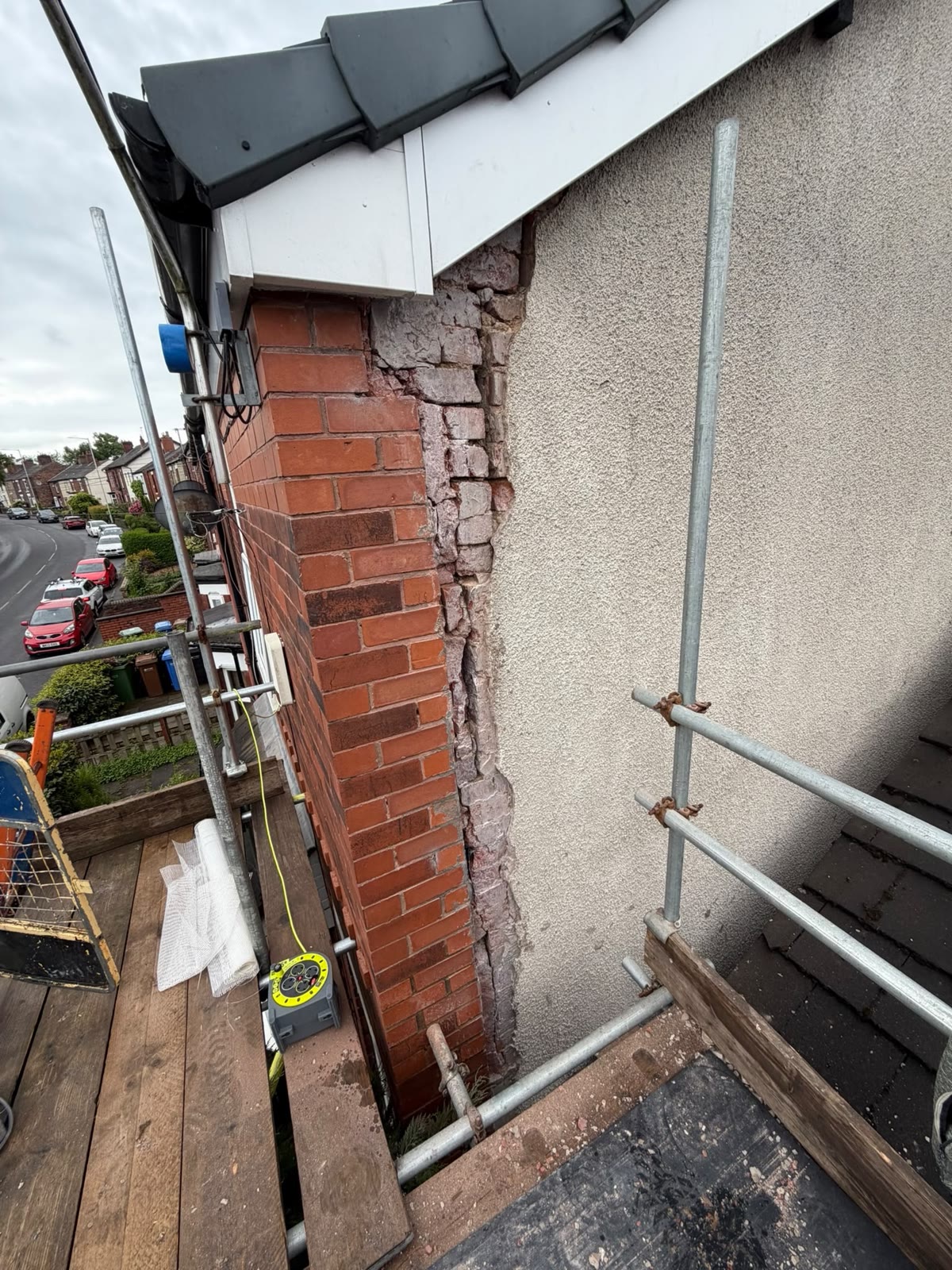
A repair, start to finish
Render that had failed where it met a brick pier — cut back to sound material, rebuilt, and finished to match the texture of the existing wall.
Everything drummy or loose comes off. There's no point rebuilding onto material that has already let go.
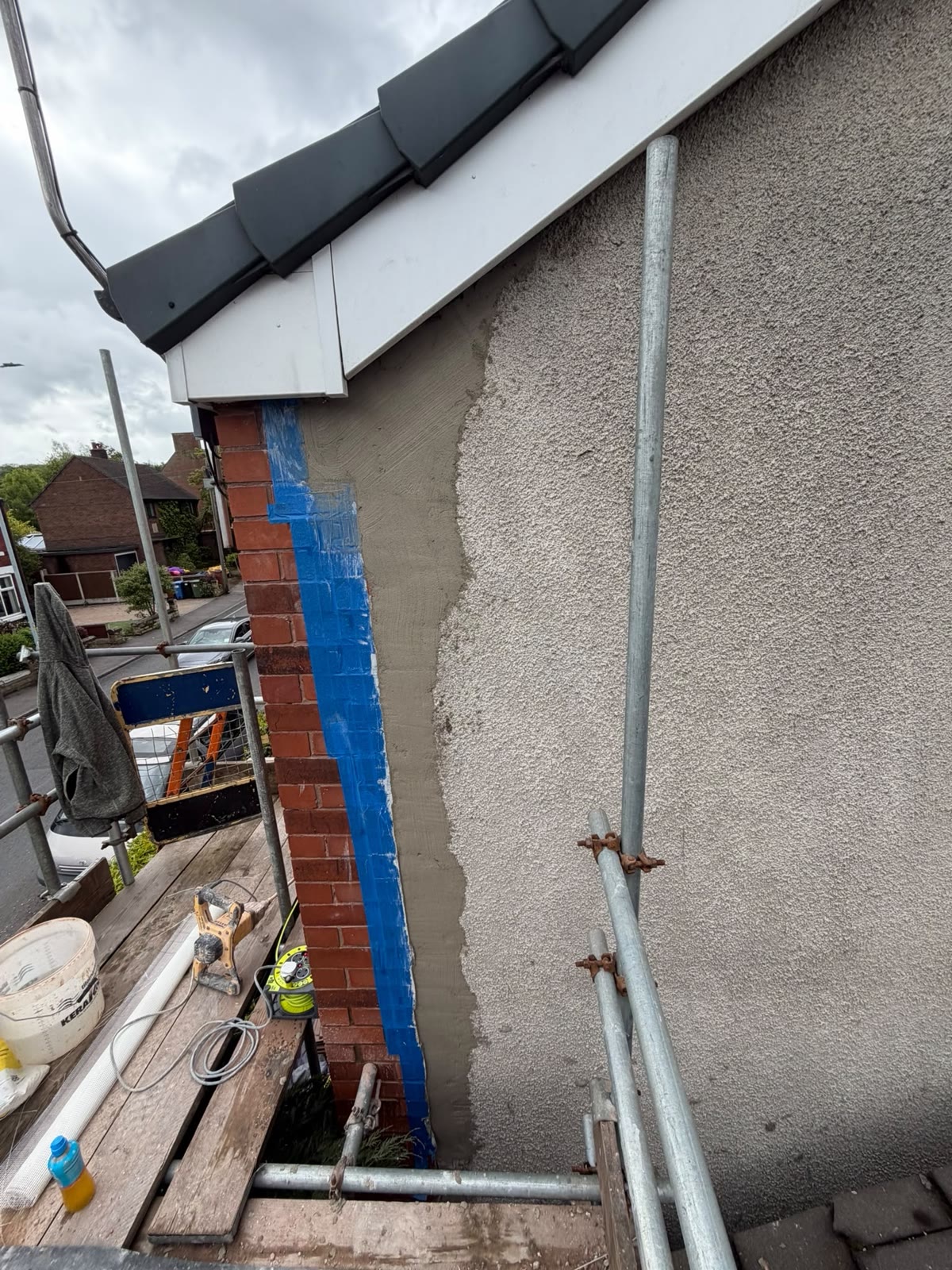
New render worked in flush, with the brickwork masked so nothing needs cleaning off it afterwards.
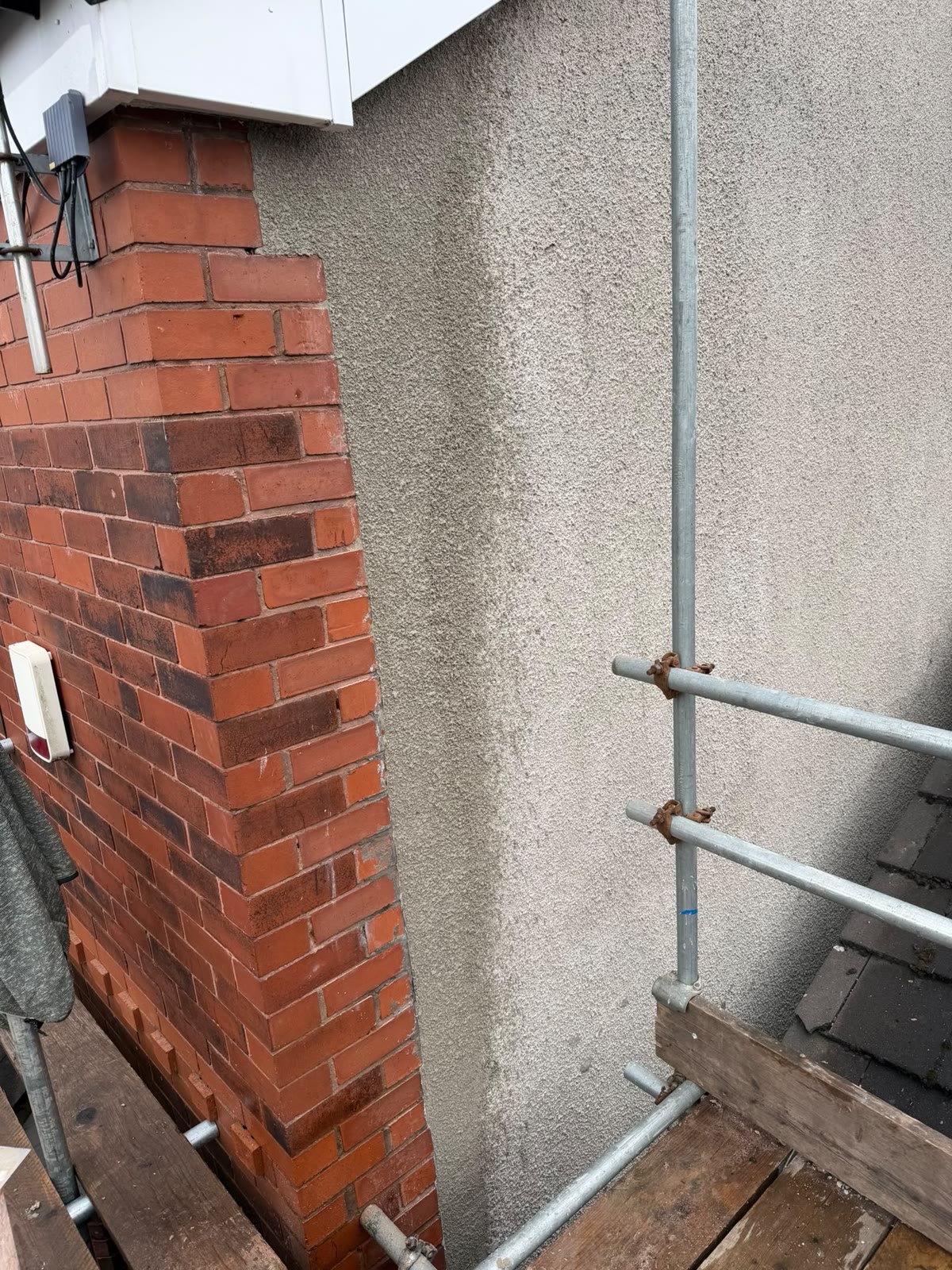
Where render meets brick is the bit that gives a bad repair away. It wants a clean, straight, deliberate line.
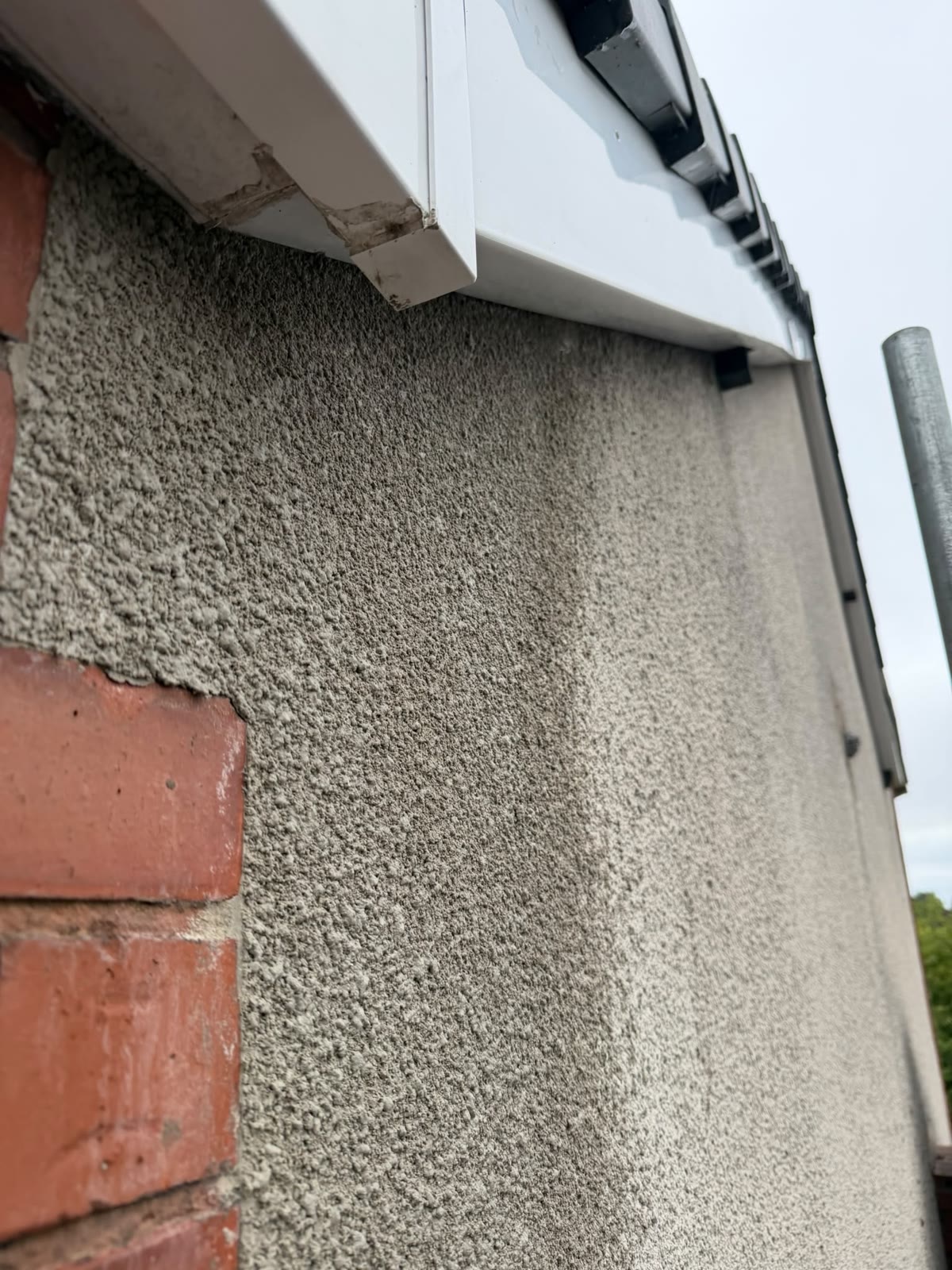
Worked to the same texture as the surrounding wall, so the eye passes over it rather than stopping.
Being straight about repairs: on an elevation that has weathered for years, a patch can be made to blend well but rarely disappears completely. We'll tell you when we think a full elevation re-coat is the only thing that will genuinely satisfy you, and price both so it's your call.
Warning signs
Tap the wall. A hollow, drum-like sound means the render has let go behind.
Diagonal cracks from the corners of openings are structural stress, not cosmetic.
New damp patches on an internal wall often start as a failed render outside.
Vertical algae stains mean water is running down the face instead of away from it.
We can usually give you a good idea of what you're dealing with from a picture.